
What to Do if a Pipe Leaks at Home: A UK Guide
A small leak can become a serious problem if water reaches flooring, ceilings or electrical fittings. Knowing what to do in the first few minutes can help limit the damage. This guide covers practical first steps for households in England and explains when to call a professional.
What to Do if a Pipe Leaks at Home: A UK Guide
1. Locate and turn off the water
If it is safe to reach, turn off the stop tap (also called a stopcock) supplying the affected property. In many UK homes it is beneath the kitchen sink, in a utility cupboard or near where the supply pipe enters the property. Locations vary, particularly in converted flats. Turn the valve gently; do not force a stuck fitting.
If a single appliance has a local isolation valve, you may be able to stop water to that appliance without shutting down the whole property. If you cannot locate the supply, contact the building manager or water provider for advice.
2. Keep clear of electrical hazards
Do not touch switches, sockets or electrical equipment where water is present. If water is entering a consumer unit, light fitting or socket, keep away and seek help from a qualified electrician or the relevant emergency service. Do not enter a flooded area to reach a stop tap.
3. Protect belongings and limit spread
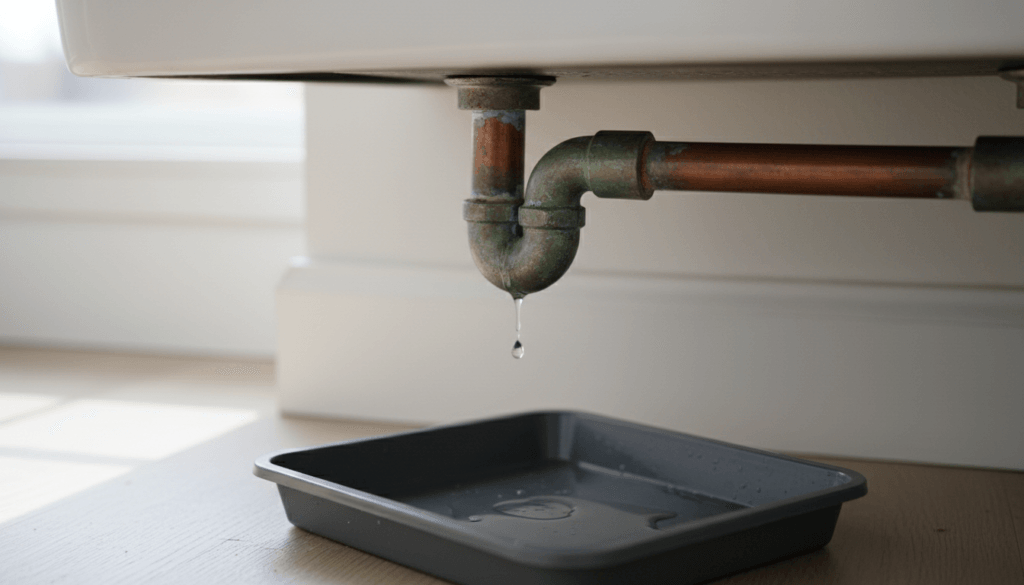
Where safe, place a bucket or tray beneath the drip and move vulnerable belongings away. Use towels to absorb small amounts of standing water. Photograph visible damage for your records and, if relevant, your insurer or landlord.
4. Identify what is leaking without dismantling the system
Note whether the water appears to come from a pipe joint, tap connection, waste pipe, radiator or appliance. Water can travel along surfaces, so the visible drip may not be the actual source. Avoid opening walls, lifting flooring or removing fixed fittings simply to investigate.
5. Arrange an appropriate repair
A professional can establish the source and assess whether a fitting, seal, length of pipe or another component needs replacing. Temporary containment is not the same as a lasting repair. A persistent leak, damp ceiling, swollen flooring or unexplained drop in water pressure warrants prompt attention.
6. Notify the right people
If you rent, tell your landlord or managing agent promptly and keep a written record. If water may affect another flat, notify the building manager. For substantial water damage, ask your home insurer how to document losses and whether specialist drying is required.
How to reduce the risk of future leaks
- Know where the main stop tap is and check that it can be operated safely.
- Look periodically beneath basins and around visible joints for moisture or staining.
- Investigate unexplained damp patches, recurring condensation and unusual water-meter readings.
- Have defective fittings assessed before small problems worsen.
Need help with a bathroom leak?
Bathroom leaks can involve plumbing, failed seals, movement around fittings or inadequate waterproofing. A lasting solution depends on identifying the cause rather than covering the symptom. See our home repair services or contact ARDECO to explain the problem.